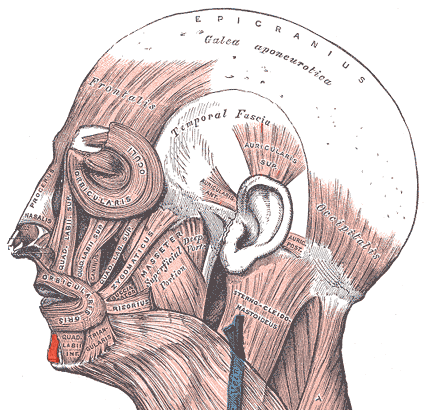
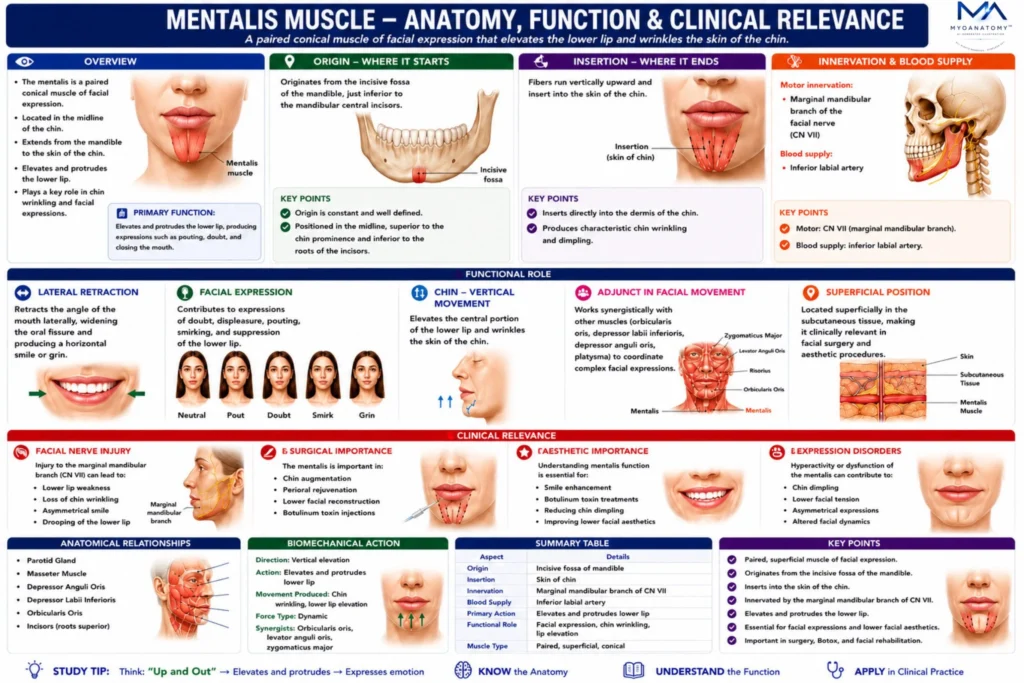
The mentalis is a paired conical muscle of facial expression located in the midline of the chin, extending from the anterior surface of the mandible to the skin of the chin. It is the principal muscle responsible for elevation and protrusion of the lower lip, playing a key role in movements of the lower lip–chin complex.
Mentalis Muscle
CORE
Overview
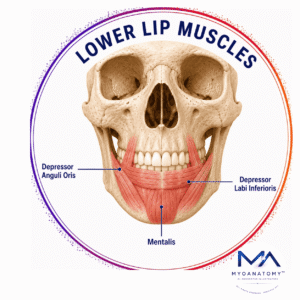
Anatomically, the mentalis lies deep to the depressor labii inferioris and medial to the depressor anguli oris, occupying the central portion of the mental (chin) region.
Unlike many facial muscles that act primarily on the mouth angle, the mentalis acts specifically on the lower lip and chin integument, producing characteristic movements of the chin and lower lip.
Because its fibers insert directly into the dermis of the chin, contraction produces wrinkling and elevation of the chin skin, creating the distinctive appearance sometimes referred to as the “pouting” or “pursed chin” expression


ANATOMY
Origin
The mentalis originates from the:
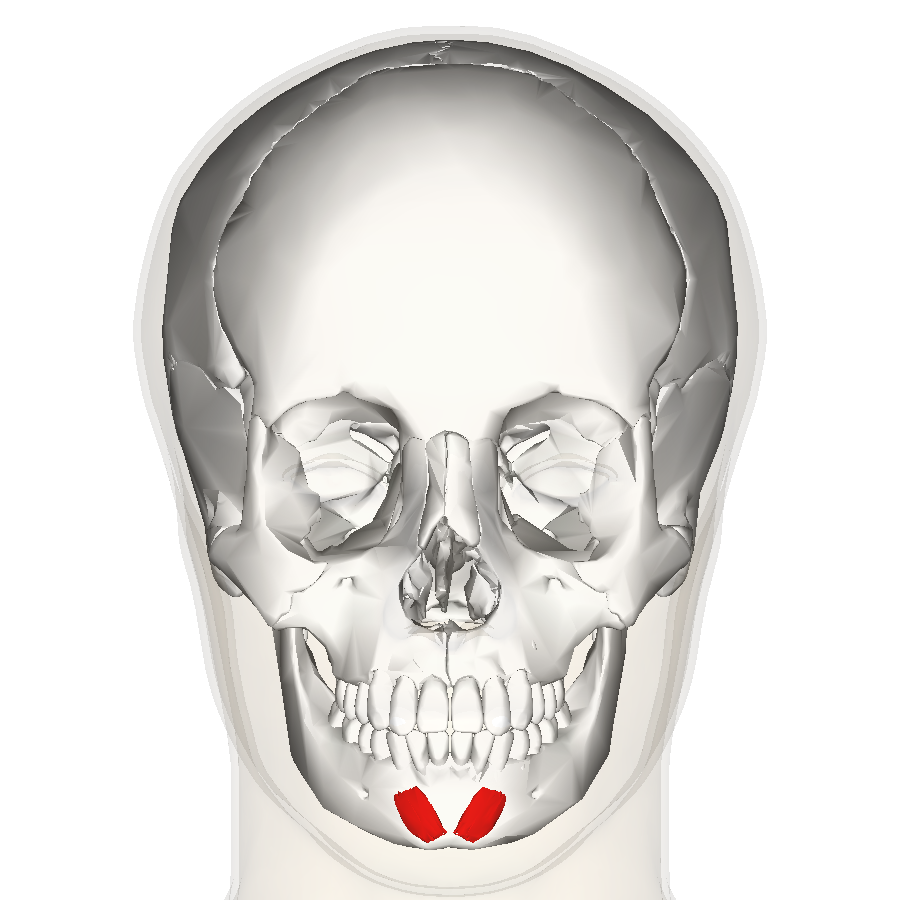
Incisive fossa of the mandible
anterior surface of the mandibular body below the incisor teeth
The origin lies superior to the chin prominence and inferior to the roots of the mandibular incisors.
Exam Question
Describe the origin of the mentalis muscle from the incisive fossa of the mandible and discuss how this bony attachment contributes to its biomechanical function in lower lip elevation and chin movement.
Insertion
The muscle fibers descend and insert into:
skin of the chin
subcutaneous tissue of the mental region
Unlike many muscles that insert into other muscles, the mentalis inserts primarily into dermal tissue, enabling direct movement of the skin.
Exam Question
Analyze the insertion of the mentalis into the skin and subcutaneous tissue of the chin. Why is dermal insertion essential for the production of chin wrinkling and lower lip protrusion?
Anatomical Relation
Superficial relations – skin and subcutaneous tissue of the chin
Deep relations -mandible
Medial relations- contralateral mentalis muscle (paired structure)
Lateral relations- depressor labii inferioris ; Depressor anguli oris
Superior relations- orbicularis oris
These relationships explain the mentalis’ role in lower lip positioning and chin contour.
Fiber Direction and Architecture
The mentalis is a short, thick muscle with vertically oriented fibers. The fibers run: inferiorly and slightly anteriorly
This arrangement allows the muscle to pull the skin of the chin upward, producing a protrusion of the lower lip.

Exam Question
Discuss the superficial, deep, medial, lateral, and superior anatomical relations of the mentalis muscle and explain their significance in facial movement, surgical anatomy, and lower facial contour.
Innervation
Motor innervation is provided by:
Marginal mandibular branch of the facial nerve (CN VII)
This branch supplies several muscles of the lower lip and chin, including:
depressor labii inferioris
depressor anguli oris
mentalis.
Exam Question
Describe the motor innervation of the mentalis muscle and explain the functional consequences of injury to the marginal mandibular branch of the facial nerve.
FUNCTIONAL ROLE
Lip Elevation
The mentalis is the principal muscle responsible for elevation of the lower lip.
Contraction elevates the central portion of the lower lip superiorly against gravity, assisting in lip sealing, oral competence, and the formation of characteristic facial expressions associated with contemplation, displeasure, or emotional tension.
Exam Question
Why is the mentalis considered the principal elevator of the central lower lip? Discuss the anatomical and biomechanical basis of this action.
Lip Protrusion
The mentalis produces anterior protrusion of the lower lip by advancing the soft tissues of the chin and lower lip forward.
This action generates the classical pouting movement and contributes to expressive facial gestures, phonation, and modulation of oral aperture during speech.
Exam Question
Explain the mechanism by which contraction of the mentalis produces anterior protrusion of the lower lip and discuss the importance of this movement in facial expression and speech.
Chin Wrinkling
Contraction of the mentalis elevates the skin of the chin against its fixed dermal attachments, producing wrinkling and dimpling of the mental region.
This distinctive surface change serves as an important visible marker of mentalis activity during emotional expression and lower facial movement.
Exam Question
Describe the anatomical basis of chin wrinkling produced by the mentalis muscle and explain why this feature is considered a visible indicator of mentalis activity.
Perioral Stability
The mentalis functions as a critical stabilizer within the lower perioral muscular complex, working synergistically with the depressor labii inferioris, depressor anguli oris, platysma, and orbicularis oris.
Through coordinated muscular balance, it maintains lower lip position during speech, mastication, swallowing, and facial expression while preserving oral competence and dynamic lower facial control.
Exam Question
Analyze the role of the mentalis within the lower perioral muscular complex. How does it contribute to oral competence, lower lip stabilization, and coordinated facial movement?
CLINICAL RELEVANCE
Nerve Injury
The mentalis is innervated by the marginal mandibular branch of the facial nerve (CN VII).
Injury to this nerve may result in weakness or paralysis of the muscle, producing flattening of the chin prominence, lower lip drooping, impaired lower facial movement, and noticeable facial asymmetry during speech and emotional expression
Exam Question
Discuss the clinical presentation of mentalis paralysis following injury to the marginal mandibular branch of the facial nerve and explain the anatomical basis of the resulting deformities.
Lip Incompetence
Normal mentalis function is essential for maintaining lip competence and oral continence.
Weakness of the muscle may compromise lower lip support, leading to incomplete lip closure, drooling, difficulty retaining saliva, impaired oral control, and altered articulation of labial speech sounds.
Exam Question
Explain how dysfunction of the mentalis muscle contributes to lip incompetence, impaired oral continence, speech disturbances, and lower facial asymmetry.
Surgical Importance
The mentalis represents a critical anatomical structure in facial reconstructive and aesthetic procedures.
Preservation of its integrity is important during chin surgery, facial reanimation techniques, and perioral reconstruction to maintain normal lower lip position, facial symmetry, and coordinated lower facial function.
Exam Question
Why is preservation of the mentalis muscle essential during chin surgery, facial reanimation procedures, and lower facial reconstruction? Discuss the functional consequences of inadequate restoration.
Aesthetic Relevance
Excessive mentalis activity may generate prominent chin dimpling, producing the characteristic “peau d’orange” (orange-peel) appearance.
Consequently, the muscle is a frequent target in cosmetic medicine, particularly during botulinum toxin treatments designed to reduce chin wrinkling, improve soft-tissue contour, and optimize lower facial aesthetics.
Exam Question
Discuss the role of the mentalis muscle in facial aging and aesthetic medicine. Explain the anatomical basis of the “peau d’orange” deformity and the rationale for botulinum toxin treatment of mentalis hyperactivity.
SUMMARY TABLE