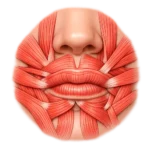
Facial Muscle

Muscles of Facial Expression, Communication and Function

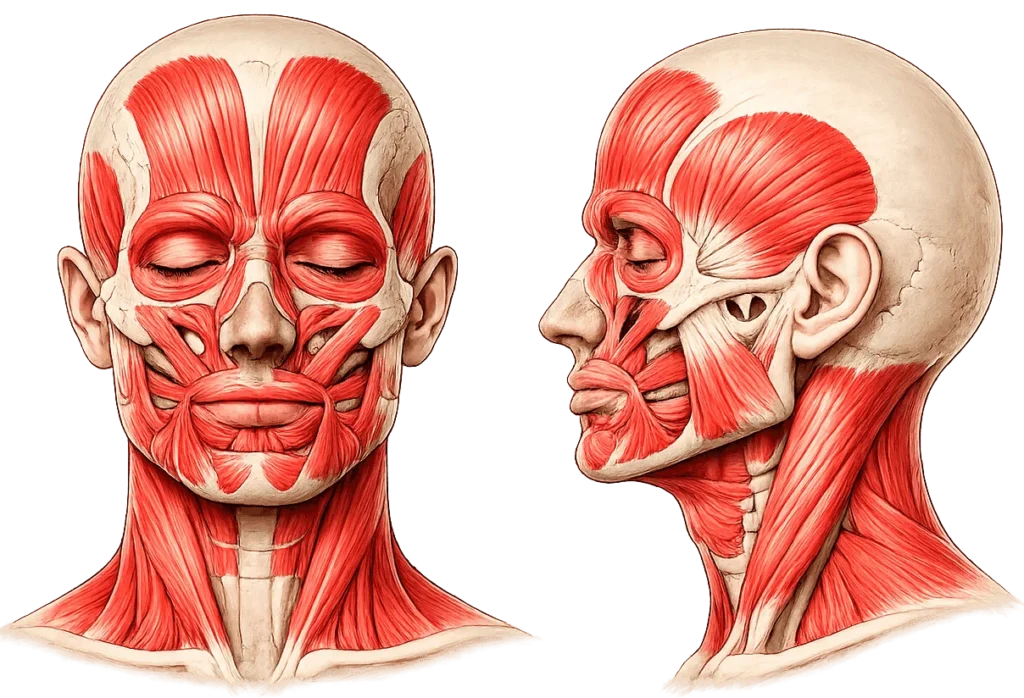
Facial muscles are specialized skeletal muscles that originate from the skull and insert into the skin, producing facial expression, communication, and emotional display.

Expression

Emotion

Innervation

watermark

Epicranial Muscles

Moves the scalp and elevates the eyebrows, contributing to facial expression and forehead movement.

A thin superficial muscle assisting scalp movement and external ear positioning.

Small muscles that produce limited movements of the external ear in humans.

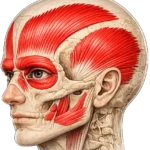
Orbital Muscles

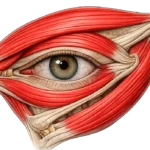
Closes the eyelids during blinking, voluntary closure, and protection of the ocular surface.

Draws the eyebrows medially and inferiorly, producing vertical forehead wrinkles during frowning.

Depresses the medial eyebrow, assisting facial expressions associated with concentration and concern.

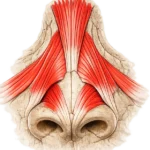
Nasal Muscles

Depresses the medial eyebrow and wrinkles the skin over the nasal bridge.

Compresses or dilates the nostrils, regulating the nasal aperture during respiration.

Draws the nasal septum inferiorly and assists narrowing of the nostrils.

Elevates the upper lip and dilates the nostril during facial expression and inspiration.

Upper Lip Muscle

Elevates the upper lip during smiling and facial expression.

Raises the upper lip and deepens the nasolabial fold.

Elevates and retracts the angle of the mouth during smiling.

Elevates the oral commissure, contributing to positive facial expressions.

Oral Muscles

Encircles the mouth, controlling lip closure, compression, and protrusion.

Compresses the cheek against the teeth, facilitating mastication, blowing, and speech.

Retracts the angle of the mouth laterally during smiling and facial expression.

Lower Lip Muscle

Depresses and everts the lower lip during facial expression.

Pulls the angle of the mouth inferiorly, producing expressions of sadness or displeasure.

Elevates and protrudes the lower lip while wrinkling the skin of the chin.

Cervical Muscles

A thin superficial cervical muscle that tenses the skin of the neck, depresses the lower lip and mandible, and contributes to facial expression and protective neck movements.

Key Point

All  muscles of the Facial expression are innervated by the facial Nerve (CN VII), except for the Platysma, which receives innervation from the cervical branch of the Facial Nerve (CN VII).

Scroll to Top