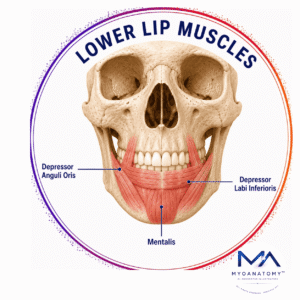
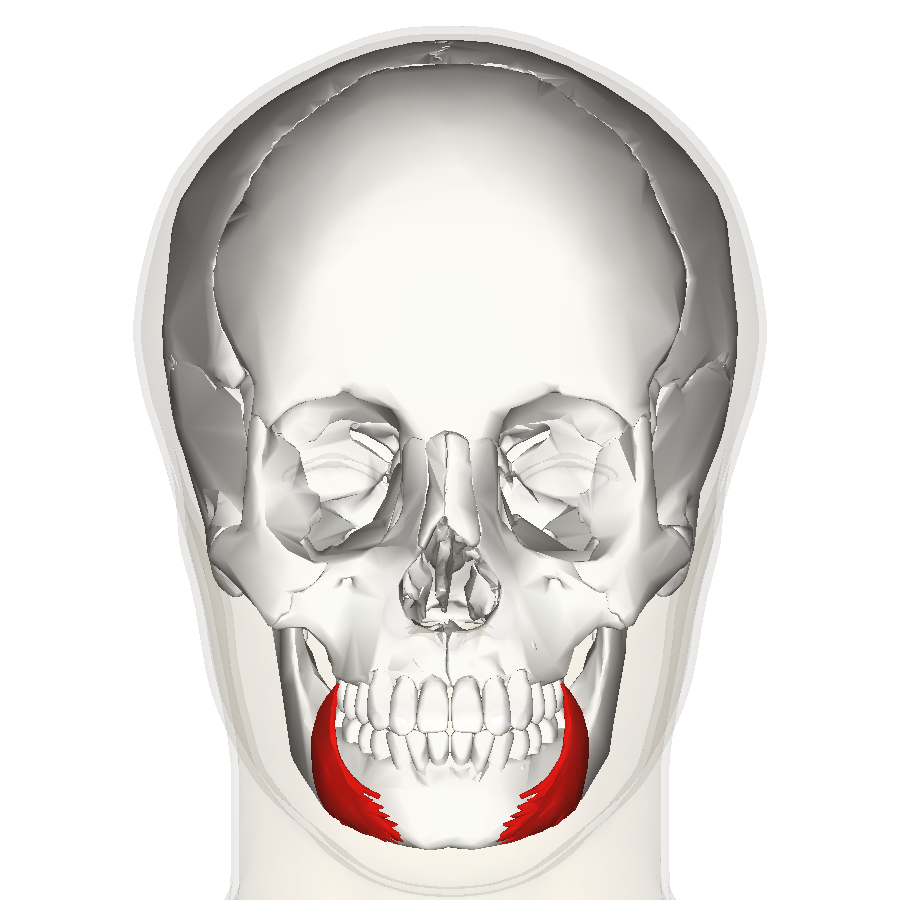
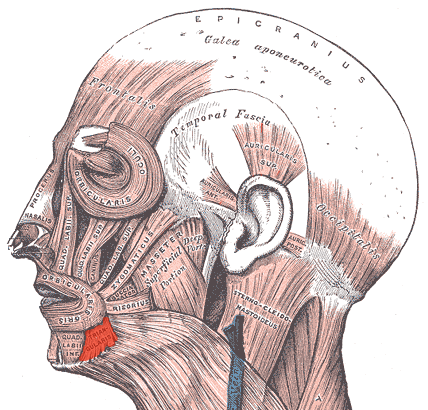
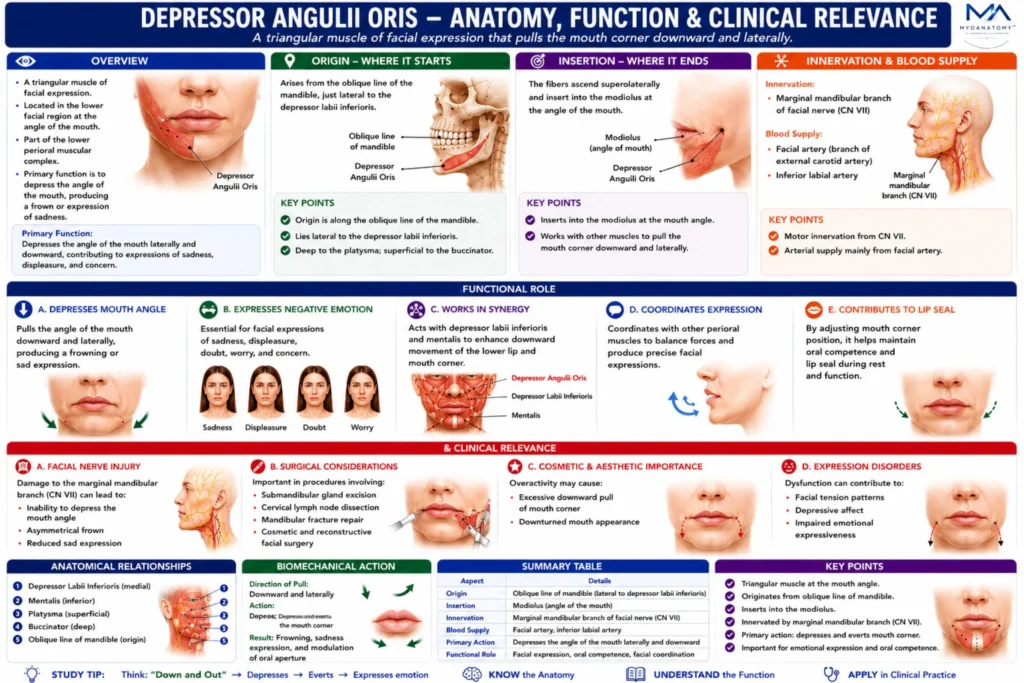
The depressor anguli oris (DAO) is a triangular muscle of facial expression located in the lower facial region , extending from the anterolateral surface of the mandible to the modiolus at the angle of the mouth. It forms an important component of the perioral depressor muscle group, which controls downward movements of the mouth during facial expression
Depressor Angulii Oris Muscle
CORE
Overview
The depressor anguli oris is a triangular muscle of facial expression originating from the oblique line of the mandible and inserting into the modiolus at the angle of the mouth.
It acts primarily to depress the oral commissure, producing facial expressions associated with sadness or displeasure.
Functionally, it plays an important role in the dynamic balance of forces acting on the mouth angle, opposing the elevator muscles such as the levator anguli oris and zygomaticus major.
Clinically, the muscle is significant in facial nerve injury, mandibular surgery, cosmetic facial procedures, and the development of age-related changes in lower facial contour


ANATOMY
Origin
The depressor anguli oris originates from the:
oblique line of the mandible
anterior portion of the mandibular body
The origin lies inferior and lateral to the origins of the depressor labii inferioris and mentalis muscles. The mandibular attachment provides a firm osseous anchor for the downward traction exerted on the oral commissure.
Exam Question
Explain the origin of the depressor anguli oris and discuss how its mandibular attachment supports its biomechanical function during facial expression.
Insertion
The muscle fibers pass superomedially and insert into:
modiolus (angle of the mouth)
fibers of the orbicularis oris muscle
adjacent dermis of the oral commissure
Because the insertion occurs at the modiolus, contraction of the muscle influences the position of the mouth corner and surrounding lip musculature.
Exam Question
Describe the insertion of the depressor anguli oris into the modiolus and explain the functional importance of this insertion in controlling oral commissure position.
Anatomical Relation
The depressor anguli oris occupies an important anatomical position in the lower face.
Superficial relations –platysma muscle subcutaneous tissue and skin of the lower cheek
Deep relations –mandible, buccinator muscle
Medial relations – depressor labii inferioris, mentalis muscle
Lateral relations– risorius muscle
Superior relations – modiolus orbicularis oris
Inferior relation – inferior border of the mandible
These relationships are important in facial surgery and reconstructive procedures involving the lower lip and chin region.
Fiber Direction and Architecture
The depressor anguli oris is a broad triangular muscle, with its base attached to the mandible and its apex directed superiorly toward the mouth angle.
Its fibers run:
superomedially, converging toward the modiolus
This architecture allows the muscle to exert:
downward traction on the oral commissure
mild lateral displacement of the mouth angle
Thus, the DAO acts as the principal depressor of the mouth corner.

Exam Question
Discuss the anatomical relations of the depressor anguli oris (superficial, deep, medial, lateral, superior, and inferior) and explain their surgical importance.
Innervation
Motor innervation is supplied by:
Marginal mandibular branch of the facial nerve (CN VII)
This branch of the facial nerve travels along the inferior border of the mandible, supplying the muscles of the lower lip and chin region.
Exam Question
Describe the motor innervation of the depressor anguli oris and explain the clinical consequences of injury to the marginal mandibular branch of the facial nerve.
FUNCTIONAL ROLE
Oral Depression
The depressor anguli oris is the primary muscle responsible for inferior displacement of the oral commissure, producing the characteristic downward movement of the mouth corner. This action forms the anatomical basis of facial expressions associated with sadness, disappointment, grief, and dissatisfaction.
By exerting downward traction on the modiolus, the muscle contributes significantly to the emotional expressiveness of the lower face and serves as an important component of non-verbal communication
Exam Question
Why is the depressor anguli oris considered the principal depressor of the oral commissure, and how does this action contribute to emotional facial expression?
Muscular Balance
The depressor anguli oris functions within a dynamic system of antagonistic facial muscles that regulate oral commissure position. It opposes the actions of the zygomaticus major and levator anguli oris, which elevate the mouth corner during smiling and positive emotional expression.
Through coordinated interaction between these depressor and elevator muscle groups, the position of the oral commissure can be precisely adjusted, allowing smooth transitions between complex facial expressions while maintaining facial symmetry
Exam Question
Discuss the antagonistic relationship between the depressor anguli oris and the elevator muscles of the mouth. How does this interaction maintain facial symmetry?
Modular Stability
Through its insertion into the modiolus, the depressor anguli oris contributes to stabilization of one of the most important fibromuscular hubs of the face. The modiolus serves as a convergence point for multiple perioral muscles, integrating forces generated during facial movement.
By balancing downward traction against opposing muscular vectors, the depressor anguli oris assists in maintaining dynamic control of the mouth corner and ensuring coordinated movement of the perioral region.
Exam Question
Explain the role of the depressor anguli oris in stabilization of the modiolus and discuss the significance of the modiolus as a facial muscular convergence point.
Perioral Coordination
Beyond emotional expression, the depressor anguli oris plays a crucial role in the coordinated function of the lower perioral muscular complex. Working in conjunction with the depressor labii inferioris, mentalis, platysma, and orbicularis oris, it regulates mouth angle position during speech, articulation, and facial animation.
This integrated muscular activity contributes to oral competence, controlled lip movements, effective communication, and the maintenance of normal lower facial mechanics.
Exam Question
Analyze the contribution of the depressor anguli oris to coordinated perioral function during speech, oral competence, and facial animation.
CLINICAL RELEVANCE
Nerve Paralysis
The depressor anguli oris is innervated by the marginal mandibular branch of the facial nerve (CN VII). Injury to this nerve may result in paralysis or significant weakness of the muscle, impairing depression of the oral commissure.
Affected individuals commonly exhibit lower facial asymmetry, inability to depress the mouth corner on the affected side, and deviation of the mouth toward the unaffected side during facial expression. These findings are characteristic of facial nerve palsy and lower facial nerve injuries.
Exam Question
Describe the clinical presentation of depressor anguli oris dysfunction following facial nerve injury and explain the mechanisms responsible for lower facial asymmetry.
Surgical Vulnerability
The marginal mandibular branch courses close to the inferior border of the mandible, making it particularly susceptible to injury during surgical procedures involving the lower face and upper neck.
Operations such as submandibular gland excision, mandibular fracture repair, cervical lymph node surgery, and cosmetic neck procedures may place the nerve at risk. Iatrogenic injury can compromise depressor anguli oris function, resulting in persistent lower facial weakness and postoperative facial asymmetry.
Exam Question
Why is the marginal mandibular branch particularly vulnerable during lower facial and upper cervical surgery, and what functional deficits may result from iatrogenic injury?
Facial Aging
Excessive activity or functional dominance of the depressor anguli oris may contribute to age-related changes of the lower face. Chronic downward traction on the oral commissure can accentuate downturned mouth corners and promote the formation of marionette lines, which extend from the mouth angle toward the chin.
Consequently, the muscle is frequently targeted in aesthetic medicine, particularly with botulinum toxin injections, to reduce depressor activity and improve elevation of the oral commissure.
Exam Question
Discuss the role of the depressor anguli oris in facial aging and explain the anatomical basis of marionette line formation.
Reconstructive Importance
The depressor anguli oris represents an important anatomical structure in facial reanimation surgery, lower lip reconstruction, and aesthetic facial procedures.
Restoration or preservation of its function is essential for achieving symmetrical lower facial movement, balanced emotional expression, and effective oral commissure control. Careful consideration of the muscle and its neural supply is therefore critical during reconstructive and cosmetic interventions involving the perioral region.
Exam Question
Explain the importance of the depressor anguli oris in facial reanimation and reconstructive surgery, including the consequences of inadequate functional restoration.
SUMMARY TABLE