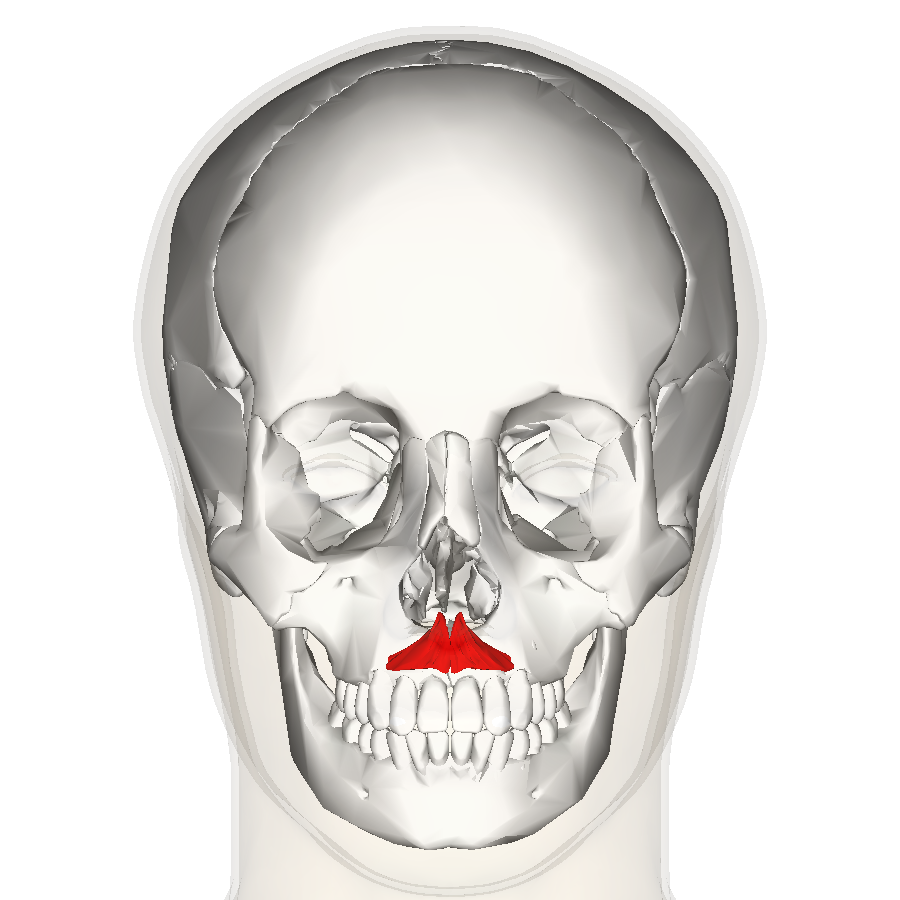
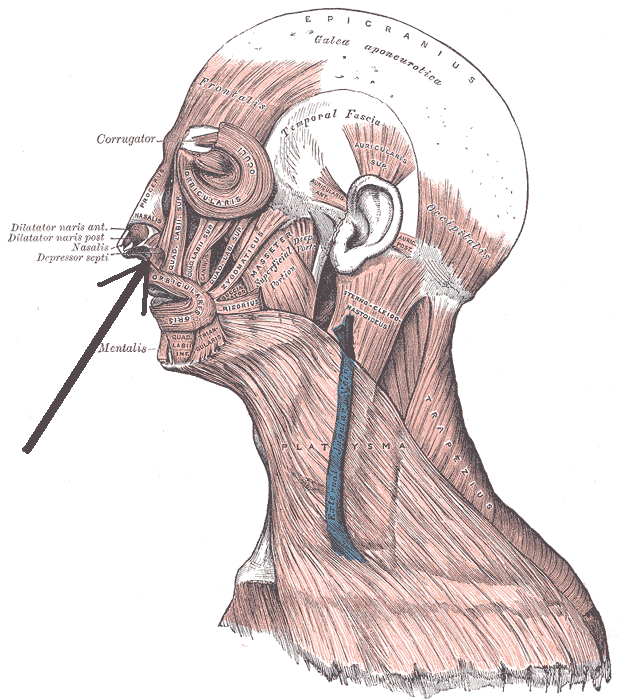
The depressor septi nasi is a small muscle of facial expression located between the upper lip and the nasal septum. It lies deep to the orbicularis oris and plays an important role in controlling the position of the nasal septum and the nasal tip.

Depressor Septi Nasi Muscle

CORE

Overview

Although relatively small, the depressor septi nasi contributes to nasal movement during facial expression, particularly when the upper lip moves during speech or smiling.

Originates muscle  from the maxillanear the incisive region and inserts into the nasal septum and the medial crura of the alar cartilage,enabling it to influence the shape of the nostrils and the nasal tip.

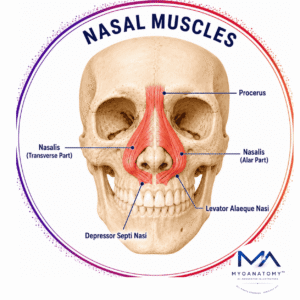
The nasalis and depressor septi nasi muscles form part of the nasal musculature of facial expression, regulating nostril diameter, nasal airflow, and nasal tip position. Through coordinated interaction with surrounding facial muscles, these muscles contribute to respiration, speech, and expressive facial movements, while also playing important roles in nasal surgery and cosmetic procedures.

ANATOMY

Origin

The depressor septi nasi arises from:

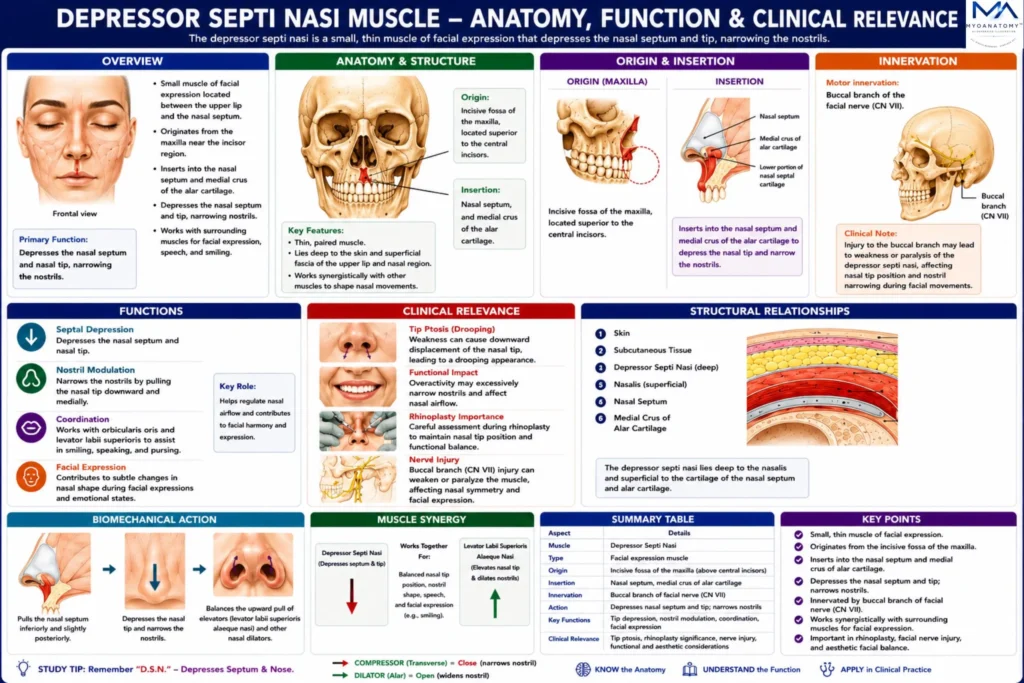
Incisive fossa of the maxilla, located superior to the central incisors.

Exam Question

Explain the anatomical origin of the depressor septi nasi muscle and discuss how its attachment to the incisive fossa of the maxilla influences the biomechanics of nasal tip movement

Insertion

The muscle fibers pass superiorly and insert into:

nasal septum

medial crus of the alar cartilage

lower portion of the nasal septal cartilage

Exam Question

Describe the insertion of the depressor septi nasi muscle into the nasal septum, medial crus of the alar cartilage, and septal cartilage. How do these insertions contribute to nasal tip depression and nostril configuration?

Innervation

Motor innervation is supplied by the:

Buccal branch of the facial nerve (CN VII).


Exam Question

Discuss the motor innervation of the depressor septi nasi muscle, including its relationship to the facial nerve (CN VII). What functional deficits may occur following injury to its supplying branch?

FUNCTIONAL ROLE

Septal Depression

The depressor septi nasi pulls the nasal septum inferiorly, producing slight downward movement of the nasal tip.

This action helps regulate the position and contour of the external nose

Exam Question

Analyze the role of the depressor septi nasi in depressing the nasal septum and nasal tip. How does this action contribute to normal facial expression and nasal morphology?

Nostril Modulation

Through its attachment to the alar region, the muscle modifies nostril shape and influences the width of the external nasal aperture during facial expression and respiration.


Exam Question

Evaluate the contribution of the depressor septi nasi muscle to modulation of nostril shape and external nasal aperture diameter during respiration and facial movement.

Lip Coordination

The depressor septi nasi works synergistically with the orbicularis oris and levator labii superioris during smiling, speaking, and upper lip elevation, producing coordinated movement of the nasal base and upper lip.

Exam Question

Explain the synergistic relationship between the depressor septi nasi, orbicularis oris, and levator labii superioris muscles. How does coordinated activity facilitate speech and smiling?

Visual Protection

As part of the nasolabial muscular complex, the depressor septi nasi coordinates nasal tip position, nostril diameter, and upper lip movement.

These integrated actions contribute to facial expression, nasal symmetry, and speech articulation.

Exam Question

Discuss the role of the depressor septi nasi within the nasolabial muscular complex. How does coordinated activity of this muscle contribute to facial symmetry, nasal positioning, and upper lip movement?

CLINICAL RELEVANCE

Tip Depression

Hyperactivity of the depressor septi nasi may cause excessive downward displacement of the nasal tip during smiling.

This dynamic tip depression can produce a drooping appearance of the nose and alter facial aesthetics.

Exam Question

Explain how hyperactivity of the depressor septi nasi muscle may produce dynamic nasal tip ptosis during smiling. Discuss the anatomical basis and aesthetic consequences of this condition.

Rhinoplasty Importance

The muscle is routinely evaluated during rhinoplasty and nasal tip surgery.

Excessive contraction may pull the nasal tip inferiorly and narrow the nostrils. Selective weakening or resection can improve nasal tip position and overall nasal balance.

Exam Question

Discuss the surgical significance of the depressor septi nasi muscle in rhinoplasty. Why is preoperative assessment of this muscle important, and how can surgical modification influence postoperative nasal aesthetics?

Nerve Disfucntion

Injury to the buccal branch of the facial nerve (CN VII) may reduce depressor septi nasi activity. Loss of normal muscle function can alter nasal symmetry and affect coordinated movements of the nasal base during facial expression.

Exam Question

Analyze the clinical consequences of injury to the buccal branch of the facial nerve supplying the depressor septi nasi muscle. How may such injury affect nasal symmetry and facial expression?

Dinamic Assessment

Assessment of depressor septi nasi function forms part of the clinical evaluation of nasal tip mobility and facial nerve integrity.

Observation during smiling and upper lip movement helps identify abnormal muscle activity that may influence nasal appearance or surgical planning.

Exam Question

Describe the clinical assessment of depressor septi nasi function. Which facial movements are evaluated, and how can abnormal muscle activity influence diagnostic and surgical decision-making?

SUMMARY TABLE

Scroll to Top