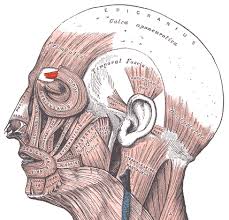
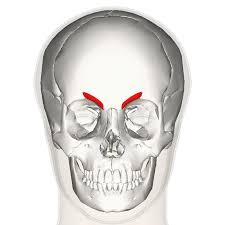
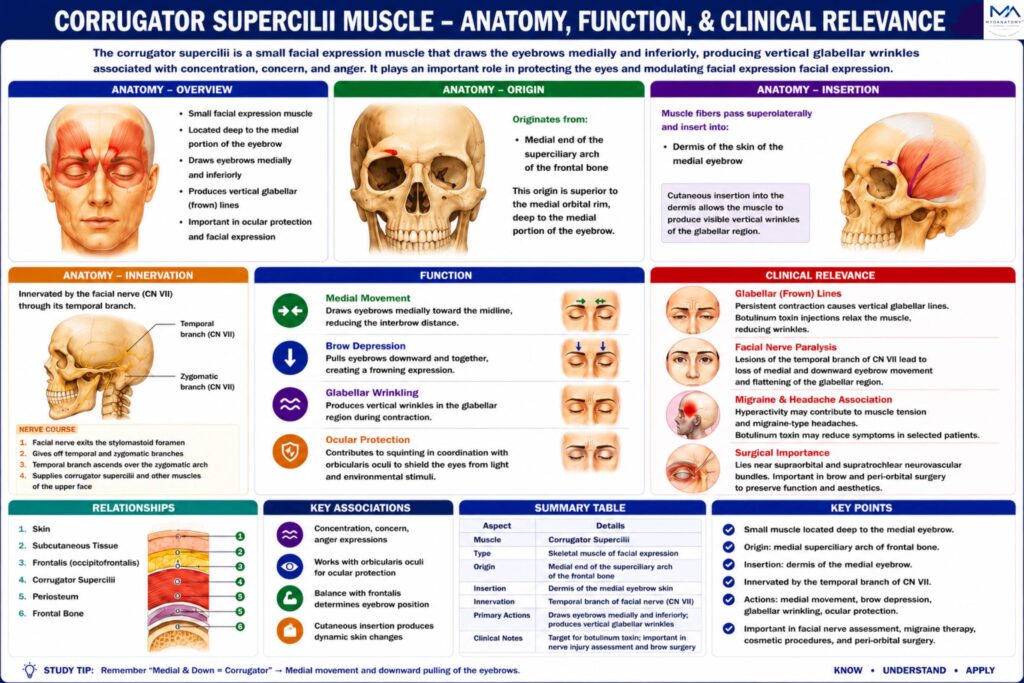
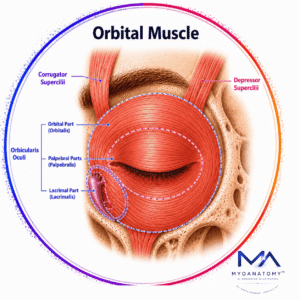
The corrugator supercilii is a small but functionally significant muscle of facial expression located deep to the medial portion of the eyebrow. It lies at the superomedial margin of the orbit, beneath the frontal belly of the occipitofrontalis and partially deep to the orbicularis oculi.

Corrugator Supercilli Muscle

CORE

Overview

The corrugator supercilii is a small facial muscle that draws the eyebrows medially and inferiorly, producing vertical glabellar wrinkles associated with concentration, concern, and anger.

Functionally, the muscle acts primarily to draw the eyebrows medially and inferiorly, creating vertical skin folds between the eyebrows. Through this mechanism it contributes to protective ocular responses, particularly by reducing the amount of light entering the eyes during intense visual focus or exposure to bright light.

Within the functional architecture of the upper face, the corrugator supercilii operates in close coordination with:

frontalis (occipitofrontalis) orbicularis oculi  Procerus

Together these muscles regulate the dynamic positioning of the eyebrows and forehead skin, enabling subtle but important variations in facial expression.

Clinically, the muscle is important in facial nerve assessment, cosmetic dermatology, migraine therapy, and brow surgery, highlighting its significance despite its small anatomical size.

ANATOMY

Origin

The corrugator supercilii originates from:

medial end of the superciliary arch of the frontal bone

This origin lies immediately superior to the medial orbital rim, deep to the medial portion of the eyebrow.

Exam Question

Explain the anatomical origin of the corrugator supercilii and discuss how its attachment to the superciliary arch influences eyebrow mechanics and upper facial expression.

Insertion

Muscle fibers pass superolaterally and insert into:

dermis of the skin of the medial eyebrow

Because the muscle inserts directly into the skin rather than bone, contraction results in visible deformation of the overlying integument.

Exam Question

Describe the insertion pattern of the corrugator supercilii into the dermis of the medial eyebrow and explain why cutaneous insertion is essential for the formation of dynamic glabellar wrinkles.

Innervation

Motor innervation is provided by the:

Temporal branch of the facial nerve (CN VII)

This nerve branch ascends across the zygomatic arch and lateral forehead, supplying several muscles of the upper face including:

frontalis

orbicularis oculi

corrugator supercilii.

Exam Question

Analyze the motor innervation of the corrugator supercilii by the temporal branch of the facial nerve (CN VII) and discuss the functional consequences of nerve injury on eyebrow movement and facial expression.

FUNCTIONAL ROLE

Medial Movement

The primary action of the corrugator supercilii is to draw the eyebrows medially toward the midline. 

This movement narrows the interbrow distance and creates the characteristic glabellar furrows, playing a major role in facial expressions associated with concentration and focused attention.

Exam Question

How does contraction of the corrugator supercilii produce medial displacement of the eyebrows, and why is this movement important for non-verbal communication and visual focus?

Brow Depression

The muscle simultaneously pulls the medial portion of the eyebrow inferiorly, producing a downward angulation of the brow. 

Functionally, this action counterbalances the elevating effect of the frontal belly of the occipitofrontalis, helping regulate eyebrow position during facial expression.

Exam Question

Explain how the corrugator supercilii contributes to brow depression and evaluate its functional relationship with the frontal belly of the occipitofrontalis in regulating eyebrow position.

Glabellar Wrinkling

Contraction of the corrugator supercilii generates vertical wrinkles within the glabellar region between the eyebrows. 

These wrinkles are characteristic features of expressions associated with concentration, emotional stress, concern, anger, and intense visual focus, making the muscle an important contributor to nonverbal communication.

Exam Question

Describe the mechanism by which the corrugator supercilii generates vertical glabellar wrinkles and discuss the anatomical basis of these characteristic facial markings.

Occular Protection

By drawing the eyebrows downward and medially, the corrugator supercilii reduces exposure of the eyes to excessive light and environmental stimuli. 

Working synergistically with the orbicularis oculi, it contributes to the protective squinting mechanism that helps shield the ocular surface and maintain visual comfort.

Exam Question

Discuss the role of the corrugator supercilii in ocular protection and explain how coordinated activity with the orbicularis oculi helps shield the eyes from excessive light and environmental stimuli.

CLINICAL RELEVANCE

Glabellar Lines

Repeated contraction of the corrugator supercilii produces vertical glabellar wrinkles, commonly known as frown lines. With aging and progressive loss of skin elasticity, these dynamic wrinkles may become permanent static facial creases. 

Consequently, the muscle represents a principal target for botulinum toxin injections aimed at reducing glabellar rhytids and restoring a smoother brow contour.

Exam Question

Explain the anatomical and biomechanical basis of glabellar (frown) lines and discuss why the corrugator supercilii is a primary target for botulinum toxin treatment.

Facial Paralysis

Injury to the temporal branch of the facial nerve (CN VII) may result in paralysis of the corrugator supercilii. Patients may demonstrate an inability to draw the eyebrows medially, loss of normal glabellar furrowing, and reduced symmetry of upper facial expressions. 

These findings can assist in the clinical assessment and localization of facial nerve dysfunction.

Exam Question

How does injury to the temporal branch of the facial nerve affect corrugator supercilii function, and how can these findings assist in clinical localization of facial nerve lesions?

Migraine Association

Excessive activity of the corrugator supercilii may contribute to increased tension within the periorbital and glabellar regions. This muscular hyperactivity has been associated with certain migraine and tension-type headache syndromes. 

For selected patients, botulinum toxin injections targeting the corrugator muscle may help reduce muscular tension and alleviate headache frequency or severity.

Exam Question

Evaluate the proposed relationship between corrugator supercilii hyperactivity and headache syndromes, and discuss the rationale for therapeutic botulinum toxin injections in selected patients.

Surgical Importance

The corrugator supercilii lies in close proximity to the supratrochlear and supraorbital neurovascular structures that supply the forehead and anterior scalp. 

During brow, upper eyelid, and facial aesthetic procedures, careful anatomical dissection is required to avoid injury to these structures, thereby preserving normal sensation, muscular function, and postoperative symmetry

Exam Question

Discuss the surgical significance of the corrugator supercilii, emphasizing its relationship to the supraorbital and supratrochlear neurovascular bundles and the implications for brow and peri-orbital procedures.

SUMMARY TABLE

Scroll to Top