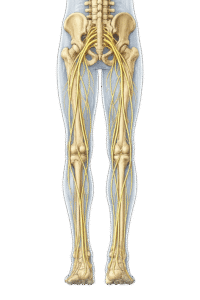
Neural Plexuses
Formation, Organization and Peripheral Innervation
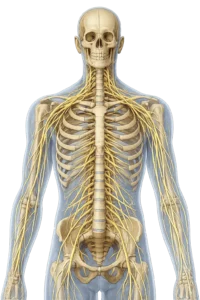
Neural plexuses are formed by the fusion of the ventral rami of adjacent spinal nerves, redistributing nerve fibers into peripheral nerves that provide coordinated motor, sensory, and autonomic innervation to the neck, trunk, and limbs.

Formation
Structure
Innervation
Cervical Plexus
Formation
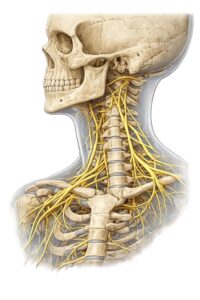
Fusion of the ventral rami of C1–C4 spinal nerves.
Branches
Forms superficial sensory and deep motor branches within the posterior cervical triangle.
Innervation
Supplies the skin and muscles of the neck, diaphragm, and portions of the shoulder.
Clinical Significance
Injury may cause diaphragmatic paralysis (phrenic nerve) and sensory loss over the neck and shoulder.
Brachial Plexus
Formation
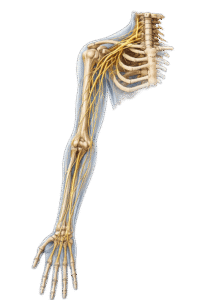
Fusion of the ventral rami of C5–Th1 spinal nerves.
Branches
Organized into roots, trunks, divisions, cords, and terminal branches.
Innervation
Supplies motor and sensory innervation to the entire upper limb and shoulder girdle.
Clinical Significance
Trauma or birth injury may produce upper or lower limb weakness, sensory deficits, and characteristic plexopathies.
Lumbar
Formation
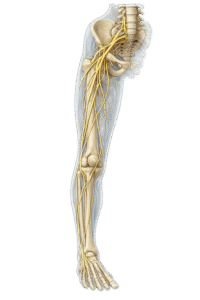
Fusion of the ventral rami of L1–L4 spinal nerves.
Branches
Forms major nerves within the posterior abdominal wall, including the femoral and obturator nerves.
Innevration
Supplies the anterior and medial thigh, hip joint, and part of the lower abdominal wall.
Clinical Significance
Compression or injury may impair hip flexion, knee extension, and sensation over the anterior and medial thigh.
Sacral Plexus
Formation
Fusion of the ventral rami of L4–S4 spinal nerves.
Branches
Forms the sciatic nerve and major branches within the posterior pelvis.
Innevration
Supplies the gluteal region, posterior thigh, most of the leg, and the entire foot.
Clinical Significance
Lesions commonly affect the sciatic nerve, causing lower limb weakness, sensory loss, and gait abnormalities.
Key Point
Only the ventral rami participate in neural plexus formation; the dorsal rami remain segmental and independently supply the intrinsic back muscles and overlying skin.