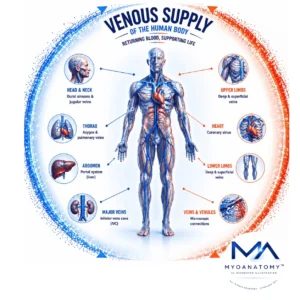
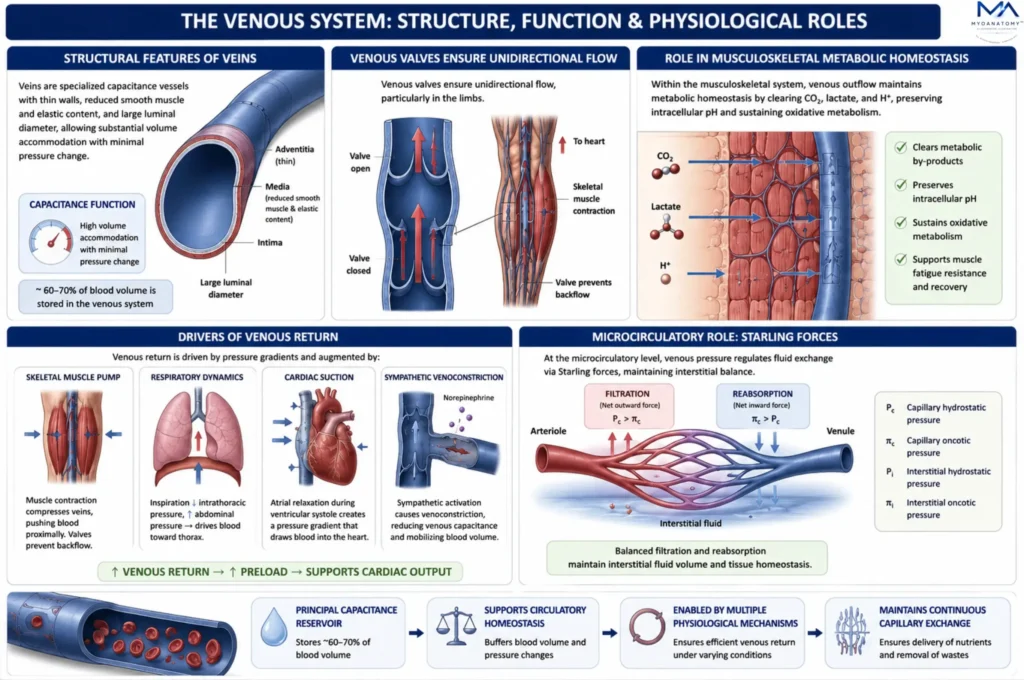
Veins are specialized capacitance vessels with thin walls, reduced smooth muscle and elastic content, and large luminal diameter, allowing substantial volume accommodation with minimal pressure change. Venous valves ensure unidirectional flow, particularly in the limbs.
Within the musculoskeletal system, venous outflow maintains metabolic homeostasis by clearing CO₂, lactate, and H⁺, preserving intracellular pH and sustaining oxidative metabolism.
Venous return is driven by pressure gradients and augmented by the skeletal muscle pump, respiratory dynamics, cardiac suction, and sympathetic venoconstriction.
At the microcirculatory level, venous pressure regulates fluid exchange via Starling forces, maintaining interstitial balance.
Functionally, the venous system serves as the principal capacitance reservoir, supporting circulatory homeostasis and continuous capillary exchange