Venous Drainage

MYO CORE

Functional Significance

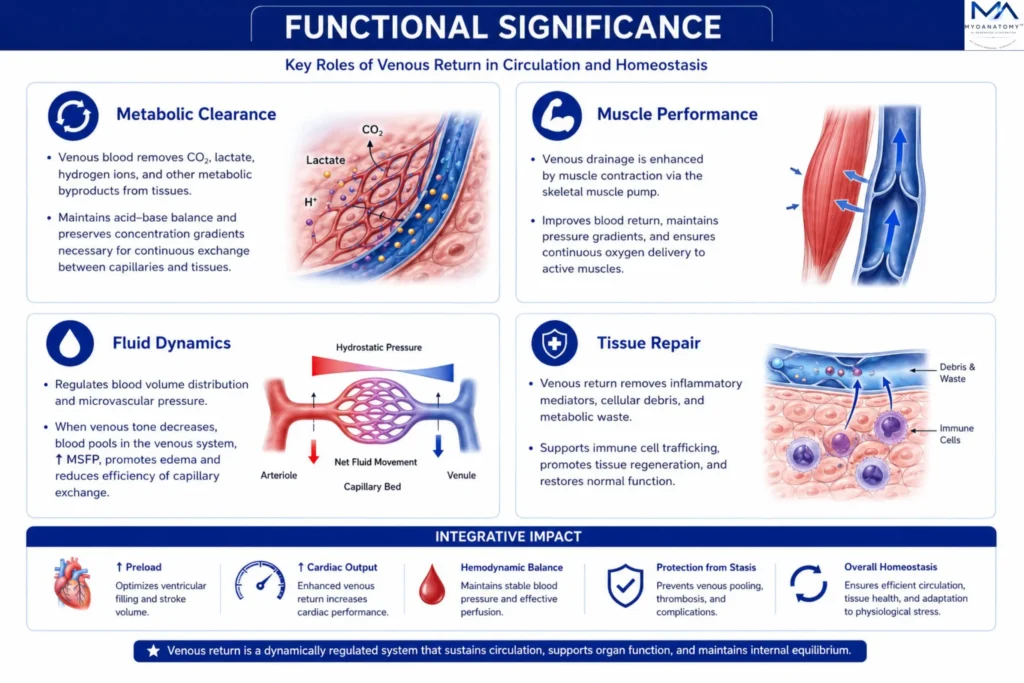
Venous drainage maintains tissue homeostasis by removing metabolic waste, preserving microcirculatory fluid balance, sustaining skeletal muscle performance, and facilitating tissue repair. By regulating venous return, capillary pressure, and interstitial fluid exchange, it optimizes oxygen delivery, nutrient transport, and organ perfusion while preventing venous congestion and edema.

FUNCTIONAL SIGNIFICANCE

Metabolic Clearence

The venous system maintains the biochemical environment of musculoskeletal tissues by removing carbon dioxide, lactate, hydrogen ions, and other metabolic byproducts generated during cellular activity. This clearance preserves concentration gradients necessary for continuous exchange between capillaries and tissues.

By preventing accumulation of metabolic waste, venous outflow supports normal cellular function and maintains acid–base balance. This is particularly important during increased metabolic activity, where efficient removal of byproducts allows sustained muscle function and prevents early fatigue.

Muscle Performance

Venous drainage is closely linked to skeletal muscle performance, especially during contraction when metabolic demand rises. Efficient removal of metabolites helps maintain optimal conditions for muscle contraction and prevents disruption of normal contractile processes.

Through the action of the skeletal muscle pump, venous return also supports arterial inflow by maintaining pressure gradients within the circulation. This ensures continuous oxygen delivery to active muscles, allowing sustained force production, delayed fatigue, and preservation of neuromuscular efficiency.

Fluid Dynamics

Venous circulation plays a key role in regulating microvascular pressure and interstitial fluid balance. By controlling venous pressure, it influences capillary hydrostatic pressure and therefore the movement of fluid between blood vessels and surrounding tissues.

As capacitance vessels, veins help regulate blood volume distribution and maintain effective circulation. When venous drainage is impaired, increased pressure within the venous system shifts fluid into the interstitial space, leading to edema and reduced efficiency of oxygen and nutrient exchange.

Tissue Repair

The venous system contributes to tissue repair by removing inflammatory mediators, cellular debris, and metabolic waste from the interstitial environment. This clearance supports resolution of inflammation and creates favorable conditions for tissue regeneration.

Efficient venous outflow also helps maintain proper circulation, ensuring delivery of oxygen and nutrients required for healing. By supporting recovery and maintaining tissue integrity, venous drainage plays an essential role in adaptation to mechanical stress and restoration of normal function.

SUMMARY TABLE

Scroll to Top