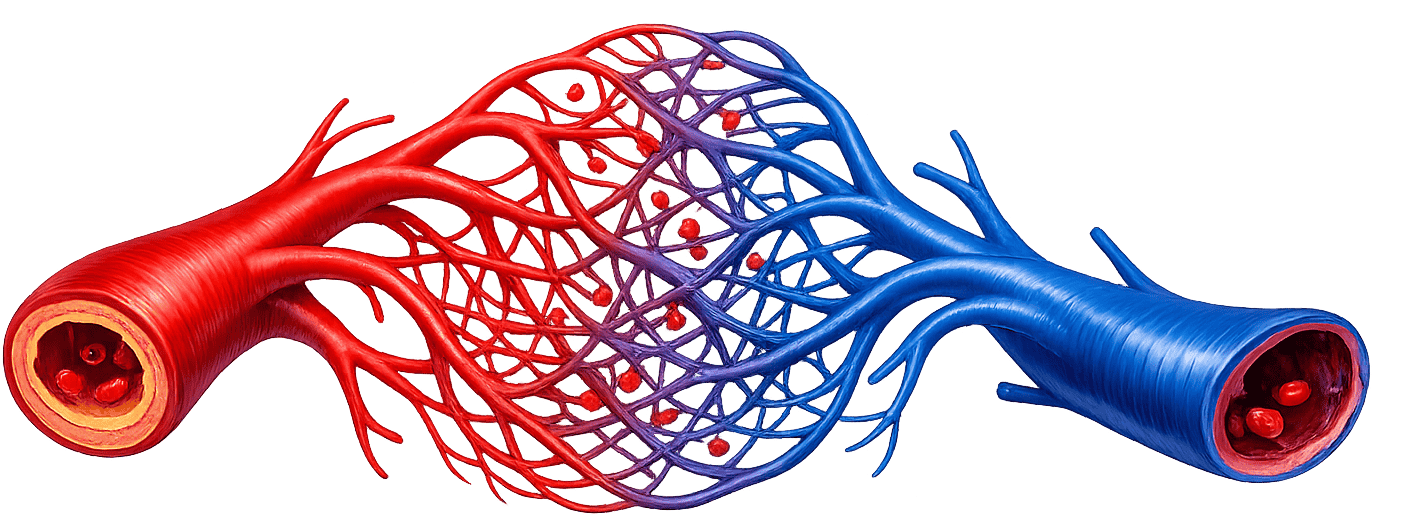
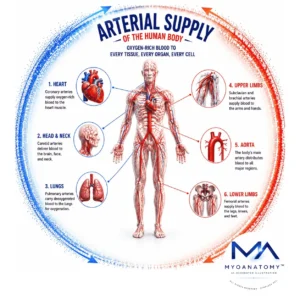
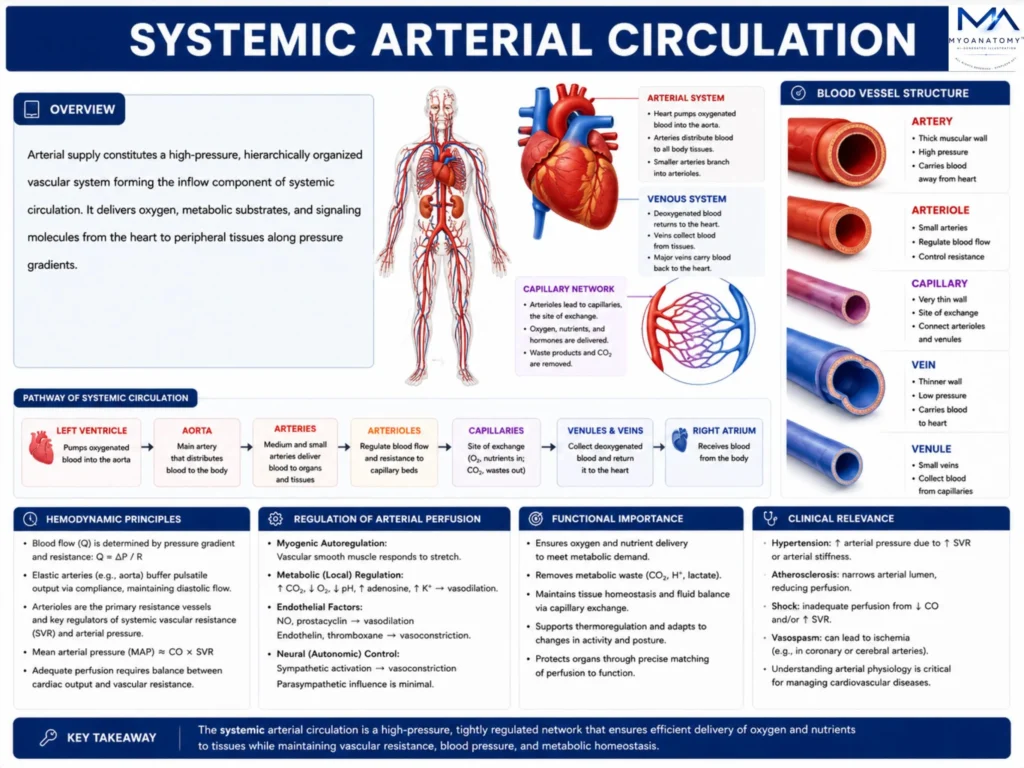
Blood is ejected from the left ventricle into the aorta and distributed through elastic arteries (pressure buffering via compliance), muscular arteries (regional distribution), and arterioles, which function as primary resistance vessels regulating tissue perfusion and systemic vascular resistance, before reaching capillary exchange networks. Within the musculoskeletal system, arterial perfusion sustains oxidative metabolism, ATP production, and force generation,while supporting protein synthesis, extracellular matrix turnover, and tissue remodeling.
Perfusion is dynamically governed by flow–metabolism coupling (↓O₂, ↑CO₂, ↓pH, adenosine), endothelial signaling (nitric oxide–mediated vasodilation), and autonomic modulation, enabling precise matching of oxygen delivery to metabolic demand.
Functionally, arterial circulation operates as a dynamic interface between cardiac output and cellular metabolism, maintaining homeostasis, facilitating thermoregulation, and enabling adaptation to mechanical loading.