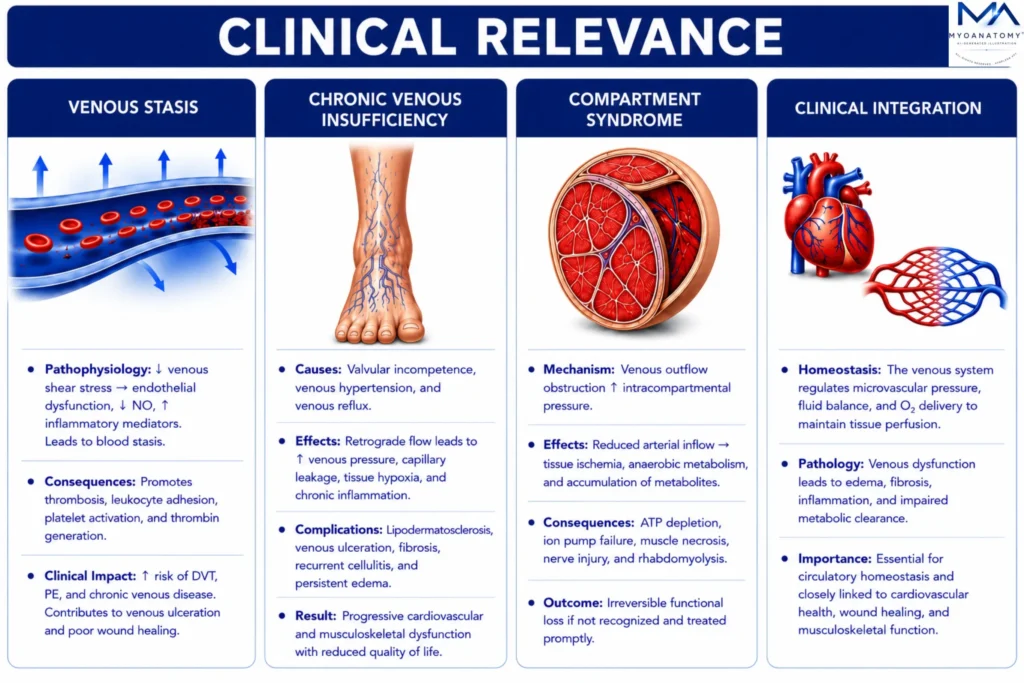
Chronic venous insufficiency arises from valvular incompetence and sustained ambulatory venous hypertension, producing persistent retrograde flow and elevated transmural venous pressure.
Chronic venous hypertension disrupts the endothelial glycocalyx, increases capillary permeability, and promotes leukocyte trapping, matrix metalloproteinase activation, oxidative stress, and extracellular matrix remodeling.
These processes progressively impair microvascular perfusion, culminating in lipodermatosclerosis, venous ulceration, fibrosis, and chronic tissue hypoxia.