Arterial Supply

MYO CORE

Clinical Relevance

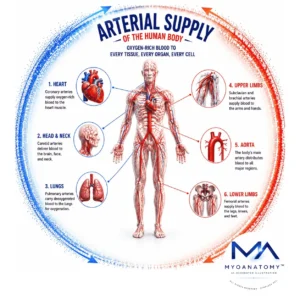
Arterial integrity is essential for tissue viability and organ function. Clinical assessment of arterial perfusion- including pulse examination, vascular anatomy, and collateral circulation- allows early recognition of ischemia, vascular injury, aneurysms, and occlusive disease. 

CLINICAL RELEVANCE

Ischemia Tissue Viability

Interruption of arterial perfusion rapidly reduces oxygen and nutrient delivery, leading to cellular hypoxia, ATP depletion, and metabolic failure. Highly active tissues such as skeletal muscle and nerves are particularly vulnerable. 

Prolonged ischemia progresses from reversible dysfunction to irreversible necrosis, emphasizing the importance of early restoration of arterial blood flow.

Vascular Injury

Arterial trauma from fractures, dislocations, or penetrating wounds may cause hemorrhage, thrombosis, or acute limb ischemia. 

End-arterial territories are especially susceptible, as interruption of a single vessel can result in tissue necrosis (e.g., avascular necrosis of the femoral head). Prompt vascular assessment and revascularization are critical for tissue preservation.

Compartment Syndrome

Compartment syndrome occurs when elevated intracompartmental pressure exceeds capillary perfusion pressure, impairing arterial inflow and venous drainage. 

Progressive ischemia rapidly damages muscles and nerves, making it a surgical emergency. Immediate fasciotomy is essential to prevent irreversible tissue loss and permanent functional impairment.

Surgical Rehabilitation

Successful surgical outcomes depend on preservation and restoration of arterial perfusion. Adequate blood supply supports fracture healing, graft survival, tissue regeneration, and functional recovery.

Comprehensive knowledge of arterial anatomy is fundamental for surgical planning, vascular reconstruction, and optimizing long-term musculoskeletal function.

SUMMARY TABLE

Scroll to Top