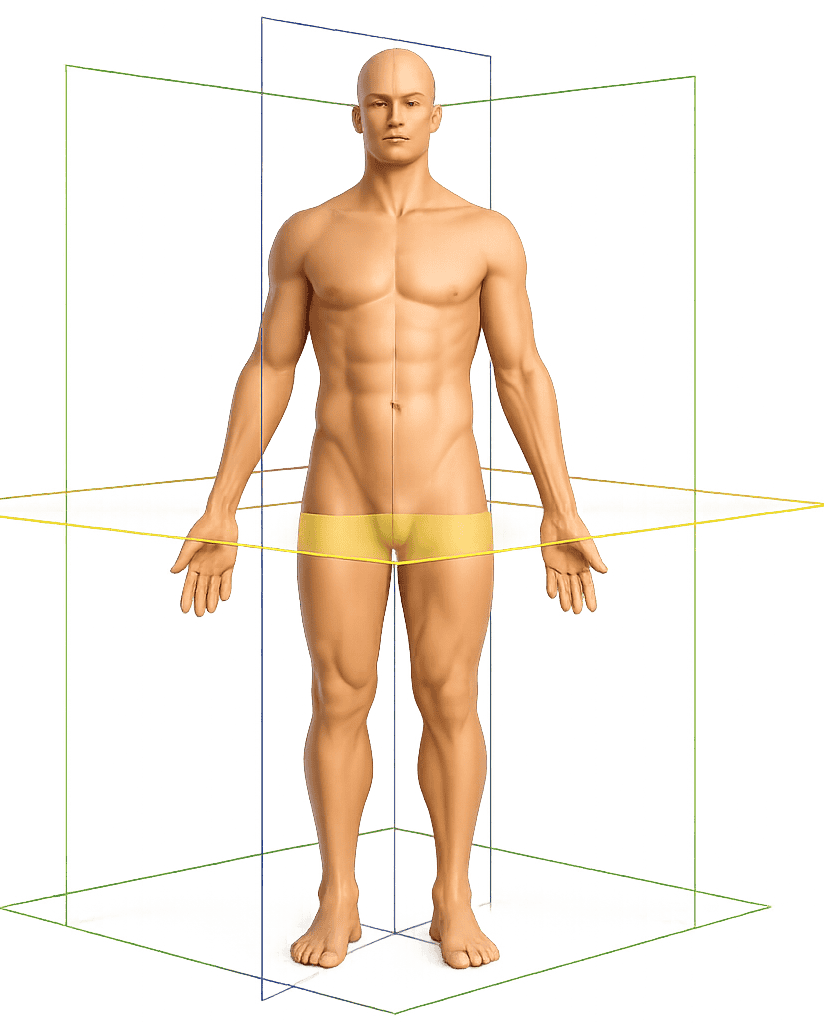
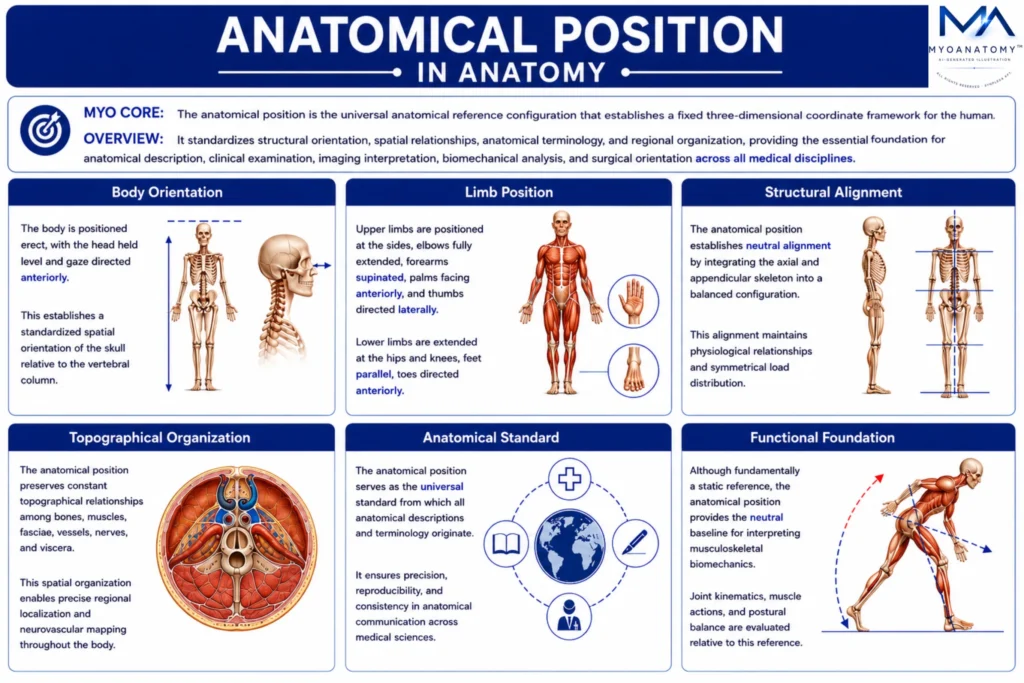
The anatomical position preserves constant topographical relationships among bones, muscles, fasciae, vessels, nerves, and viscera, creating a reproducible anatomical map of the human body.
This spatial organization enables precise regional localization, neurovascular mapping, compartmental analysis, and accurate identification of anatomical landmarks during clinical examination, imaging, and surgical procedures.